
Unlock ROI & Reduce Risk by Automating Medication Dispensing
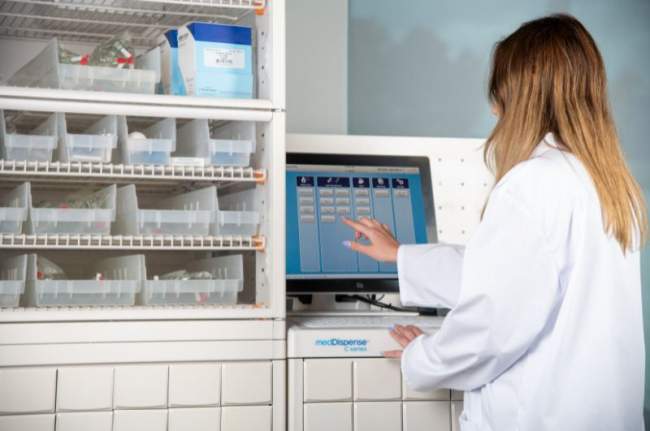

For correctional, behavioral health, and rural hospitals charged with creating ROI by automating medication dispensing, the paths are many—and shorter than hospital administrators might think
When every dollar counts, technology should deliver more than convenience—it should pay for itself. For state correctional institutions, behavioral health centers, and small rural hospitals, automated medication dispensing cabinets (ADCs) do exactly that.
The returns possible on an ADC investment are many. Certainly, saved time allows for more focused patient interactions. But the benefits extend far beyond the simple automation of a manual process.
Benefits also include dramatically increased security, and chain-of-custody records for every medication. Built-in checks and audit trails have far-reaching implications for insurance, liability, morale, and patient satisfaction.
Here's more on why the return on investment is real and why acting now is so important.
Compared to automated medication dispensing, manual medication handling processes are slow, risky, and expensive:
• Staff Time Lost: Nurses spend hours searching for meds, logging transactions, and managing keys.
• Diversion Risk: Controlled substances in behavioral health and correctional settings are high-risk for theft or misuse.
• Compliance Challenges: Manual logs increase the likelihood of audit issues and regulatory penalties.
An ADC automates to minimize or eliminate risks and inefficiencies—saving time, money, and reducing liability:
• Time Savings: ADCs are keyless systems—and keyless systems mean no lost keys to track down. By removing keys from the dispensing process, care teams can speed up medication administration by as much as 30%.
• Diversion Prevention: Badge or biometric-based access and audit trails eliminate key-related security gaps.
• Compliance Built In: Automatic documentation streamlines audits and improves regulatory confidence.
For a 100-bed rural hospital or behavioral health facility:
• Labor savings alone can offset system costs within 30 months.
• Avoided penalties and legal risks from diversion are a hidden but real ROI boost.
• Modular design means you start small and scale as needed without overspending.

Smaller hospitals face staffing shortages and tight budgets. ADCs cut wasted time on manual processes and improve efficiency. This helps clinicians focus on patient care while ensuring compliance.
Correctional healthcare teams manage high-risk medications and strict security protocols daily. Compliant medication dispensing technology and processes are paramount. That's why ADCs allow controlled access and keep full audit trails.
These features reduce diversion of staff attention as well as facility liability. They also ensure that patients receive medication accurately, and on time. In environments where security and accountability matter most, ADCs are absolutely essential.
Behavioral health settings require stringent control of controlled substances while maintaining efficient care delivery. ADCs eliminate key-based systems that are prone to misuse. They improve medication tracking and enhance staff confidence in medication security, all while streamlining workflows in high-demand environments.
Automated medication dispensing isn’t a luxury—it’s a strategic investment that improves safety, reduces liability, and delivers measurable cost savings. In addition, facilities often recoup their ADC investments in just 2.5 years.
Ultimately, the question operators must ask isn't “Can we afford this?”—it's “Can we afford to wait?”
Ready to See the Numbers?
Schedule a free ROI analysis and discover how medDispense® by TouchPoint Medical can transform medication management in your facility.
