
Help Pediatric Dental Patients Feel Better with Simple Distraction Displays
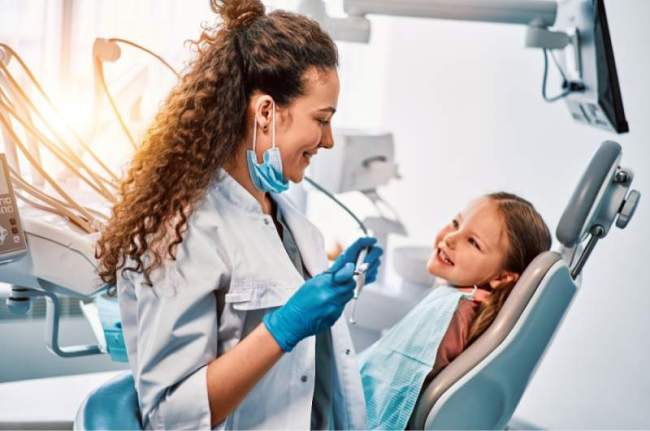
Treating young patients requires an entirely different clinical mindset than treating adults. In the world of pediatric dentistry, clinicians do not just manage teeth; they manage emotions, attention spans, and natural fears. For a child, stepping into an operatory can feel overwhelming. Keeping a young patient calm and cooperative is just as critical to clinical success as the dental procedure itself.
To create positive experiences, forward-thinking practices rely on modern behavioral techniques and supportive technology. Among the most effective tools available today are simple distraction displays. When planned and installed correctly, overhead screens turn a stressful operatory into an inviting, child-friendly care space.
However, simply hanging a consumer television from the ceiling will not solve clinical workflow challenges. To build a truly effective pediatric operatory, practices must balance patient distraction with clinical access, parental communication, and medical-grade safety standards.
Lying back in a dental chair under glaring exam lights can make any patient nervous. For a child, that sensory overload often triggers severe dental anxiety. In pediatric dentistry, clinicians have long embraced distraction therapy as an evidence-based method to ease this fear.
Engaging a child’s attention with a favorite cartoon, movie, or nature program works wonders. Visual and auditory distraction shifts focus away from the unfamiliar sounds of handpieces, suction, and ultrasonic scalers. Studies show that effective distraction lowers heart rates, reduces fidgeting, and helps dental teams finish restorative procedures and hygiene cleanings much faster.
Ceiling-mounted displays are the gold standard for delivering this therapy. Wall-mounted screens often force children to crane their necks, turn their heads, or try to sit up during treatment. In contrast, a ceiling mount places the display directly in the child's natural line of sight while reclined.
This ideal screen placement delivers two major advantages:
- Uninterrupted Clinical Line of Sight: Because the child looks straight up, their head stays in the ideal resting position. Dentists and hygienists spend less time asking the child to hold still and more time focusing on precise care.
Improved Clinician Ergonomics: When a young patient constantly shifts around, clinicians must twist, lean, and strain their necks to maintain visibility. A still patient allows providers to maintain neutral posture, preventing the repetitive strain injuries common in dental careers.
While a ceiling monitor keeps young patients calm during treatment, its job does not end when the handpiece stops. A well-designed operatory uses technology to connect clinical care with parent communication.
At the end of an appointment, the dentist must review oral hygiene, present findings, and discuss treatment plans with parents. A fixed, rigid ceiling mount cannot assist with this step. Instead, practices need an articulating ceiling mount that moves smoothly between clinical tasks.
With a flexible articulating arm, the dental team can easily pull the monitor down and angle it toward the parent's chair. Within seconds, the screen transitions from streaming entertainment to displaying high-resolution digital X-rays or intraoral camera scans.
This shift turns passive waiting into an active "co-discovery" session. Parents can clearly see decay, developmental concerns, or crowding alongside the clinician. Showing high-definition imagery directly to parents builds trust, answers questions before they arise, and significantly improves case acceptance—all without requiring a secondary mobile cart or a separate consultation room.
Pediatric operatories are lively, high-traffic spaces. Hardware installed in these rooms must withstand continuous daily adjustments and curious young hands. Off-the-shelf retail brackets cannot handle the physical demands of an active healthcare setting.
When evaluating overhead mounting systems for pediatric dentistry, practice owners should evaluate three essential design factors:
- Internal Cable Management: Dangling cords create immediate safety hazards. Curious kids may pull or kick loose wires, potentially damaging equipment or causing injuries. In addition, exposed cables collect dust and aerosolized debris. Medical-grade mounting arms feature fully enclosed cable routing that keeps wires completely out of sight and out of reach.
- Tamper-Resistant, Smooth Surfaces: Mounting hardware should feature smooth profiles, rounded corners, and fully enclosed joints. This thoughtful engineering shields patients from accidental bumps and keeps small fingers away from dangerous pinch points.
- Hospital-Grade Disinfection Resistance: Pediatric treatment rooms require rapid, thorough disinfection between back-to-back appointments. Standard consumer paints and plastics quickly degrade, peel, and discolor when cleaned with harsh medical disinfectants. Quality dental mounts feature non-porous, chemical-resistant powder coatings that endure continuous cleaning without degrading.
Creating a welcoming, functional pediatric operatory requires equipment designed around the shared needs of patients, parents, and clinicians.
TouchPoint Medical’s AccessMount™ Titan Elite Ceiling Monitor Mount delivers the exact flexibility modern pediatric practices demand. Engineered specifically for clinical environments, the Titan Elite provides generous articulation, effortless multi-directional positioning, and internal cable management. Your team can seamlessly transition from overhead entertainment during treatment to chairside education during parental consultations.
Investing in medical-grade mounting infrastructure allows pediatric dental practices to eliminate operatory friction, calm young patients, and keep daily schedules running on time.
